
Choosing between PCD and carbide tooling can directly affect cutting quality, tool life, machining speed, and production cost. For CNC manufacturers, understanding PCD vs carbide tools is important when machining different workpiece materials and balancing productivity with tool consumption. Although both are widely used in precision machining, their properties and ideal applications are different.

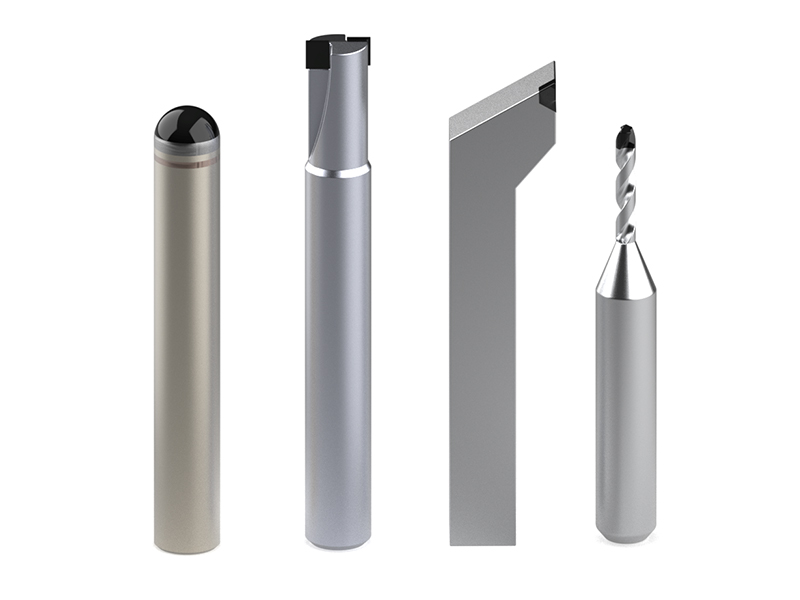
PCD, or polycrystalline diamond, is a cutting material made by combining diamond particles with a supporting substrate. Its high hardness and wear resistance make PCD tools suitable for abrasive non-ferrous materials and composites.
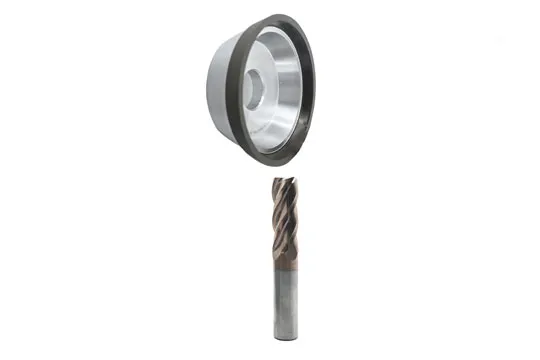
Carbide tools use cemented carbide, typically combining tungsten carbide with a metallic binder. Carbide provides a balance of hardness, toughness, wear resistance, and cost, making it suitable for a much broader range of machining operations.
When comparing PCD vs carbide tools, the basic difference is that PCD prioritizes extreme wear resistance and edge life in suitable materials, while carbide offers greater versatility across different machining conditions.
The main differences between PCD vs carbide tools involve hardness, wear resistance, toughness, cutting conditions, and application range.
Hardness and wear resistance: PCD generally provides higher resistance to abrasive wear and can maintain a sharp cutting edge for extended periods when machining suitable materials. Carbide offers good wear resistance with greater flexibility in grade selection.
Toughness and versatility: Carbide is generally more adaptable to varying cutting conditions and a wider range of workpieces. PCD is more specialized and should be matched carefully with the material being machined.
Tool cost and service life: PCD tools normally require a higher initial investment, but their longer service life can make them economical in high-volume machining. Carbide tools usually have a lower entry cost and broad application flexibility.
A practical PCD vs carbide tools comparison should consider the complete production cycle rather than purchase price alone.
| Factor | PCD Tools | Carbide Tools |
|---|---|---|
| Hardness and wear resistance | Extremely high | High |
| Typical tool life | Long in suitable applications | Depends on grade and conditions |
| Material range | Selected non-ferrous and abrasive materials | Broad material compatibility |
| Initial cost | Generally higher | Generally lower |
| Best value | High-volume, wear-intensive machining | Flexible CNC production |
For production lines where tool changes create significant downtime, the longer usable life of PCD can offset its higher initial cost. Carbide may provide a more practical balance where machines handle different materials or operations.
Material selection is one of the most important factors in PCD vs carbide tools selection.
PCD is commonly considered for aluminum alloys, copper alloys, graphite, wood-based materials, carbon fiber reinforced plastics, glass-fiber composites, and other abrasive non-ferrous materials. Its wear resistance is particularly valuable where conventional tooling experiences rapid edge degradation.
Carbide tools cover a wider range of workpieces. Depending on grade and coating, they can be used for aluminum, steels, stainless steels, cast iron, hardened materials, and various non-metallic materials.
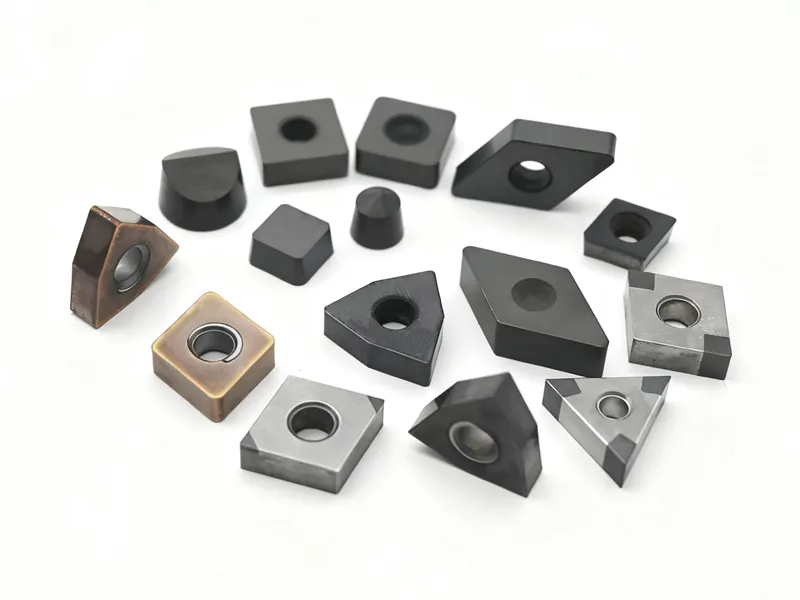
Understanding CNC insert material is therefore important when selecting an insert or cutting tool because material compatibility determines whether the tool's advantages can be achieved in actual machining.
The choice between PCD vs carbide tools should start with the workpiece and production requirements.
Workpiece material: Determine whether the material is abrasive, non-ferrous, ferrous, composite, or otherwise difficult to machine.
Production volume: High-volume machining can justify the higher initial cost of PCD when longer tool life reduces tool changes and downtime.
Surface finish: Where consistent surface quality is critical, tool edge stability should be considered alongside cutting parameters.
Machine conditions: Spindle speed, machine rigidity, coolant, workholding, and tool geometry all influence actual performance.
Total machining cost: Compare tool price, expected tool life, replacement frequency, downtime, and production output rather than evaluating purchase price alone.
For flexible CNC production involving multiple materials, carbide may offer greater adaptability. For high-volume machining of suitable abrasive non-ferrous materials, PCD can provide a stronger focus on wear resistance and consistent performance.
PCD tools are frequently used in automotive components, aerospace composites, woodworking, electronics-related materials, and precision machining of aluminum parts. They are particularly useful when high wear resistance and consistent surface quality are important.
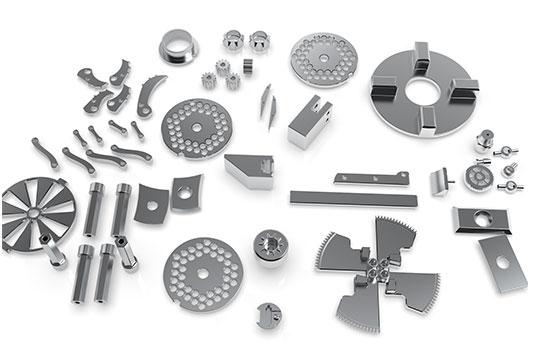
Carbide tools are used much more broadly across automotive, machinery, mold making, general manufacturing, and CNC production. Drilling, milling, turning, grooving, and various insert-based operations can all use carbide tooling.
For manufacturers managing several machining processes, understanding PCD vs carbide tools helps match the tool material to the actual production requirement instead of applying one tooling solution to every operation.
Yes. PCD offers extremely high hardness and wear resistance, particularly when machining suitable abrasive materials.
Generally, carbide tools have a lower initial cost, while PCD can provide longer service life in suitable high-volume applications.
PCD is primarily used for non-ferrous and abrasive materials. Carbide is generally more versatile for steel and other ferrous materials.
In suitable applications, PCD can provide longer wear life. Actual performance depends on material, tool geometry, cutting parameters, and machine conditions.
Not necessarily. PCD can be highly effective for high-volume aluminum machining, but carbide may be more economical for lower-volume or flexible production.
Workpiece material should be the starting point, followed by cutting conditions, required surface finish,
This is the last one.