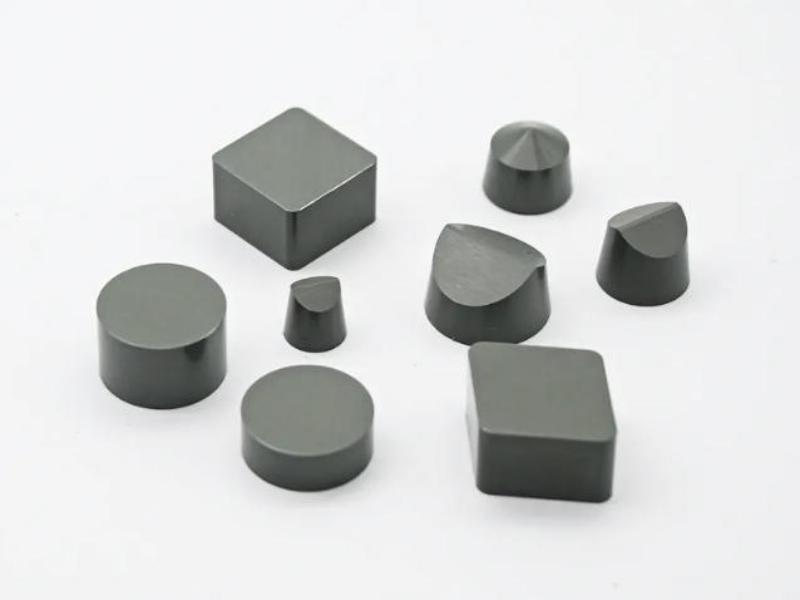

In modern metal machining, ceramic turning inserts are often selected for applications where high cutting speed, heat resistance and wear performance are critical. However, choosing ceramic tools is not simply about selecting a harder cutting material. Their performance depends heavily on machining stability, chip control, workpiece conditions and cutting parameters.
Unlike carbide tools that can tolerate a wider range of machining conditions, ceramic inserts are designed around a specific processing window. Their excellent high-temperature capability can become a major advantage when the cutting environment is controlled, but factors such as vibration, interrupted cutting and unstable workholding may significantly affect tool life.
Understanding how heat, chips and cutting stability interact is essential for manufacturers who want to maximize the value of ceramic turning inserts in practical production.

Ceramic cutting tools are widely recognized for their hardness, thermal resistance and ability to maintain cutting performance at elevated temperatures. However, their behavior is different from conventional carbide tools because ceramic materials generally have lower toughness.
The key advantage of ceramic is its hot hardness. During high-speed machining, cutting temperatures can rise significantly, but ceramic materials can maintain their hardness and wear resistance under these conditions. This makes them suitable for specific high-speed turning operations where carbide tools may experience faster wear.
At the same time, high-temperature performance does not mean unlimited impact resistance. Ceramic tools require stable machining conditions because sudden mechanical shock, excessive vibration or unpredictable cutting forces can lead to edge damage.
Therefore, the success of ceramic turning inserts depends not only on material hardness but also on how well the entire machining system is controlled.
In many machining processes, heat is considered a major challenge because excessive temperature can accelerate tool wear and affect workpiece quality. However, ceramic turning works differently because controlled heat can actually support cutting performance.
When machining conditions are suitable, the high thermal resistance of ceramic allows the cutting edge to remain stable at temperatures that would negatively affect some other tool materials. JoyJet’s ceramic insert information highlights heat resistance up to approximately 1200°C as a product-level capability, showing why ceramic tools are commonly considered for high-temperature cutting environments.
However, temperature alone does not determine machining success. The relationship between cutting speed, workpiece material, chip formation and cooling conditions must also be considered. Excessive heat concentration in unstable operations may still damage the cutting edge.
This means the goal is not simply to reduce heat, but to manage heat within an appropriate machining range.
One of the biggest challenges for ceramic turning inserts is interrupted cutting. During continuous turning, the cutting edge experiences relatively stable contact with the workpiece. In interrupted operations, the insert repeatedly enters and exits the cutting zone, creating thermal and mechanical changes.
These repeated cycles may cause:
Thermal shock caused by rapid temperature changes
Mechanical impact during cutting engagement
Edge chipping caused by unstable cutting forces
Increased sensitivity to vibration and poor clamping conditions
The suitability of ceramic tools depends greatly on the actual cutting environment.
| Cutting Condition | Ceramic Tool Suitability |
|---|---|
| Stable continuous cutting | Excellent potential |
| High-speed finishing | Strong potential |
| Light interrupted cutting | Application-dependent |
| Heavy interrupted cutting | Requires careful evaluation |
| High vibration machining | Generally unfavorable |
For this reason, ceramic tools are often associated with stable, rigid machining systems where cutting conditions can be carefully controlled.
Chip management is another important factor affecting ceramic tool reliability. Even though ceramic inserts can withstand high temperatures, poor chip control can create excessive loading on the cutting edge.
Chip thickness, chip flow direction, feed rate and depth of cut all influence how cutting forces are transferred to the insert. A suitable chipbreaker design can help control chip formation and reduce the risk of unstable cutting behavior.
For example, excessive feed may increase cutting force and mechanical stress, while unsuitable depth of cut can create unfavorable chip shapes. These issues are not caused by the ceramic material itself but by a mismatch between tool geometry and machining conditions.
Therefore, selecting ceramic turning inserts requires considering both the cutting material and the complete machining strategy.
Cutting speed is one of the most important parameters when using ceramic tools. Unlike some cutting materials where higher speed quickly leads to rapid degradation, ceramics are often designed to operate effectively in higher-temperature cutting environments.
However, increasing speed does not automatically guarantee better results. The ideal cutting speed depends on:
Workpiece material
Machine rigidity
Insert grade
Tool geometry
Cooling strategy
Required surface finish
JoyJet’s ceramic insert information emphasizes high heat resistance and wear resistance for demanding machining applications. In actual production, tool life and performance still depend on matching the insert characteristics with the correct operating conditions.
A well-balanced machining setup can allow ceramic inserts to deliver stable performance, while an unsuitable process window may shorten tool life regardless of the insert quality.
Beyond tool life, manufacturers also need to consider the final quality of machined components. The performance of ceramic turning inserts can influence dimensional consistency, surface roughness and overall production stability.
Stable ceramic machining can provide excellent finishing capability because the cutting edge maintains wear resistance during high-speed operations. However, excessive vibration, edge damage or unstable chip formation may negatively affect surface integrity.
Important factors include:
Cutting edge condition
Workpiece rigidity
Thermal behavior
Machining consistency
The classification and application of ceramic cutting materials are also recognized in international cutting tool standards such as ISO 513, which covers hard cutting materials including ceramics, diamond and boron nitride.
Understanding these factors helps manufacturers avoid viewing ceramic inserts as a simple replacement for carbide tools. Instead, ceramic should be considered a specialized solution for suitable machining environments.
Ceramic turning inserts achieve their best performance when heat resistance, cutting speed and machining stability work together. Their advantage comes from maintaining hardness at high temperatures, but successful application also requires proper chip control, rigid equipment and suitable cutting parameters.
JoyJet’s ceramic inserts are designed for high-speed machining applications where wear resistance and thermal performance are important considerations. Actual results depend on workpiece materials, machine conditions and process optimization.
Ceramic inserts can be used in some interrupted turning applications, but their performance depends on the severity of impact, machine rigidity and cutting conditions. Heavy interruptions usually require careful evaluation.
Ceramic materials have excellent hardness but lower toughness compared with some other cutting materials. Sudden mechanical shock, vibration or unstable cutting forces can cause edge chipping.
The use of coolant depends on the application. Some ceramic machining processes rely on controlled high-temperature cutting, while others may require cooling strategies based on workpiece material and process requirements.
Vibration increases mechanical stress on the cutting edge and may accelerate chipping or reduce tool life. Stable clamping and rigid machine conditions are important for ceramic machining.
Ceramic inserts are typically selected for applications where high-speed cutting and stable conditions are possible. Rough turning suitability depends on the workpiece material, cutting forces and insert grade.
Strong workholding reduces vibration and movement during machining, helping protect the ceramic cutting edge from unexpected impact and improving process consistency.