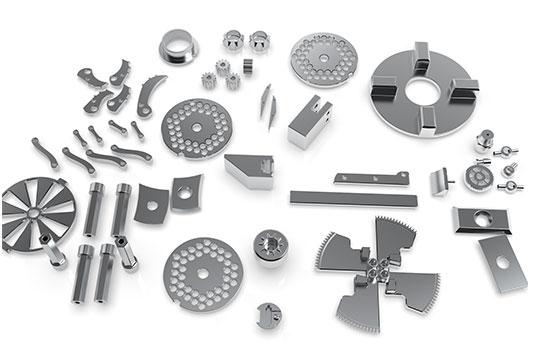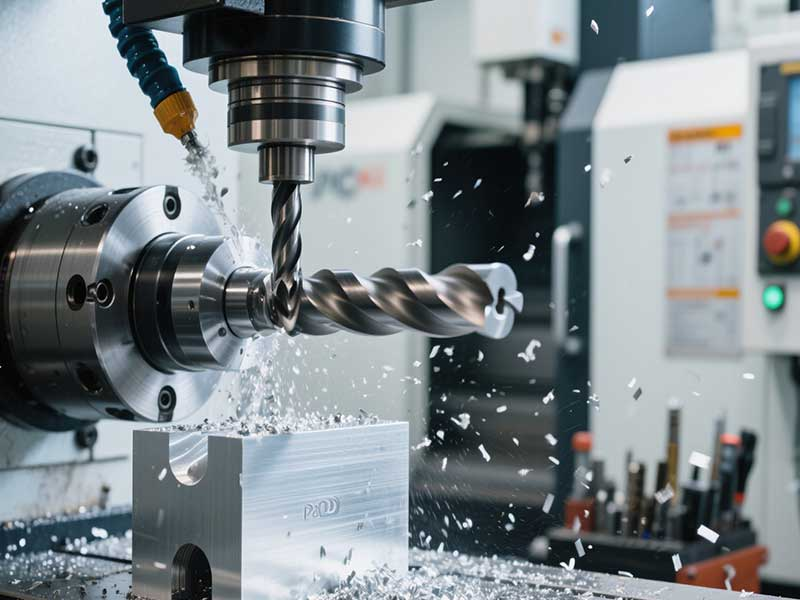

Aluminium is widely used in automotive components, aerospace structures, electronics and precision mechanical parts because of its lightweight and excellent machinability. However, many manufacturers discover that aluminium machining is not always as simple as expected. Although aluminium is softer than many engineering metals, its ductility and adhesive characteristics can create problems such as built-up edge (BUE), burr formation, surface tearing and unstable finishing quality.
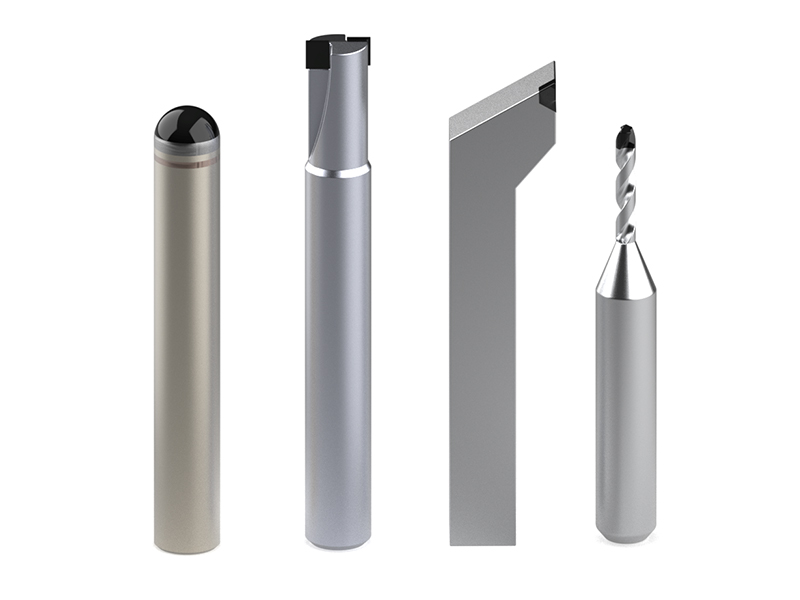
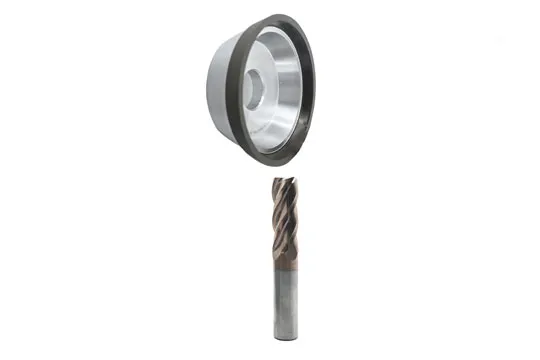
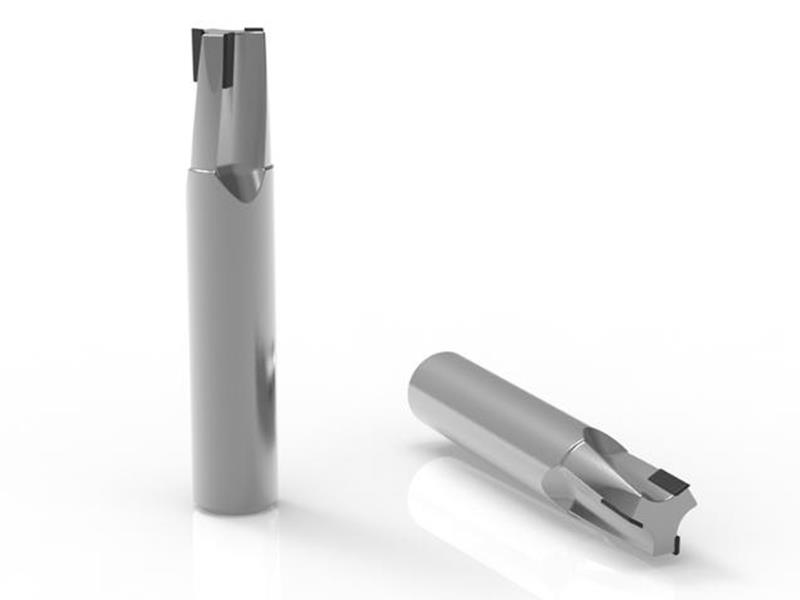
Choosing the right cutting tool plays an important role in solving these issues. PCD Tools for Aluminium are commonly selected for high-precision aluminium machining because their hardness, wear resistance and sharp cutting edges help maintain stable cutting performance. However, tool material alone does not determine machining results. Cutting geometry, process conditions and workpiece characteristics also influence final surface quality.
Aluminium is often considered an easy-to-machine material, but its softness can actually create unique machining challenges. Unlike brittle materials that break into small chips, aluminium tends to produce continuous and ductile chips. If chip control is not properly managed, these chips may interfere with the cutting process and affect surface quality.
One major challenge is adhesion. During cutting, aluminium material can stick to the cutting edge because of friction and heat generated at the tool-workpiece interface. This phenomenon may lead to built-up edge formation, where aluminium accumulates on the tool edge and changes the effective cutting geometry.
Common aluminium machining problems include:
Built-up edge affecting cutting stability
Burr formation at entry and exit edges
Surface tearing caused by unstable cutting conditions
Inconsistent finishing quality during long machining cycles
These problems are especially important in industries requiring high dimensional accuracy and excellent surface appearance. A tool that maintains a sharp and stable cutting edge can significantly influence machining consistency.
Built-up edge is one of the most common issues when machining aluminium. It occurs when workpiece material adheres to the cutting edge instead of being smoothly removed as chips.
The basic process can be understood as:
Aluminium cutting → Material adhesion → Built-up edge formation → Changing cutting geometry → Surface defects
Once BUE develops, the cutting edge no longer maintains its original shape. This can increase cutting forces, create vibration and reduce surface quality. In some cases, the built-up material may suddenly break away, causing unstable machining results.
The formation of BUE depends on several factors, including cutting temperature, friction conditions, tool sharpness, cutting speed and aluminium alloy composition. A tool with excellent hardness but unsuitable edge geometry may still experience adhesion problems.
This is why aluminium machining requires more than simply selecting a harder tool material. The interaction between tool design and machining conditions determines whether the cutting process remains stable.
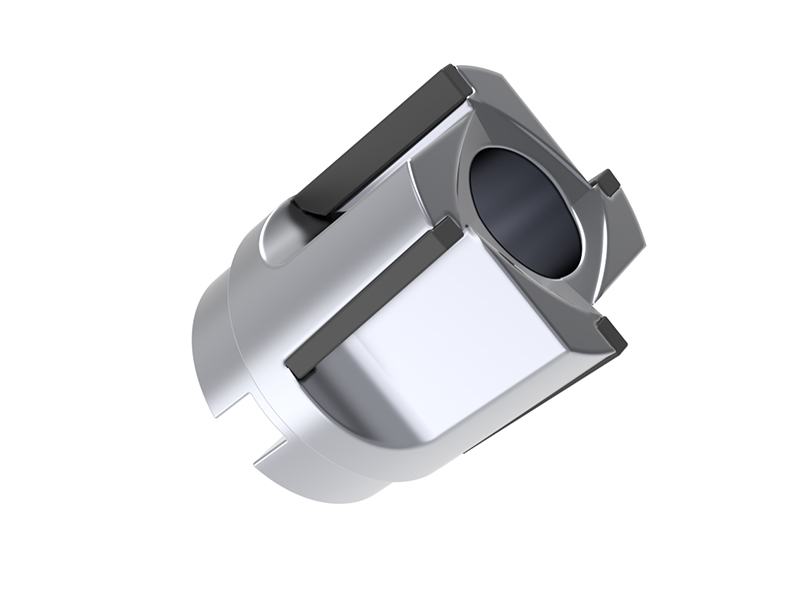
PCD Tools for Aluminium are widely used in applications where manufacturers need improved edge stability, low wear and consistent finishing performance. Polycrystalline diamond combines extremely high hardness with excellent wear resistance, making it suitable for machining non-ferrous materials such as aluminium alloys.
However, reducing burrs is not simply a matter of choosing a harder tool. Burr formation is also influenced by tool edge condition, cutting direction, workpiece geometry and machining parameters.
A properly designed PCD cutting edge can help improve aluminium machining by maintaining:
Stable edge sharpness during long production cycles
Consistent cutting performance
Reduced material adhesion tendency
Better control of finished surface quality
For example, JoyJet’s PCD tooling products are designed for aluminium and other non-ferrous machining applications, with product information highlighting high wear resistance and long tool life. Actual machining performance still depends on factors such as aluminium alloy type, tool geometry, machine rigidity and cutting conditions.

Cutting speed has a direct influence on the relationship between heat generation, chip formation and surface finish. Increasing speed can improve productivity, but excessive or unsuitable cutting conditions may increase adhesion problems and affect machining stability.
The relationship can be summarized as:
Cutting speed → Cutting temperature → Material adhesion behavior → Surface quality
At an appropriate cutting speed, aluminium chips can be removed more efficiently and the tool can maintain a cleaner cutting edge. However, when conditions are not properly balanced, higher temperatures may increase the possibility of aluminium sticking to the tool.
JoyJet’s PCD tool information emphasizes the suitability of PCD solutions for high-speed aluminium machining and highlights wear resistance advantages. However, there is no universal cutting speed that applies to every aluminium component. The ideal setting depends on alloy composition, machine capability, tool geometry and required surface finish.
Therefore, manufacturers should optimize the complete machining process rather than focusing on speed alone.
Although hardness is one of the most important characteristics of PCD tooling, cutting edge geometry often determines how effectively the tool performs in real aluminium machining.
Important geometry factors include:
The rake angle influences chip flow and cutting force. A suitable rake design can help reduce resistance during aluminium cutting.
Clearance angle affects friction between the tool and workpiece. Proper clearance helps reduce unnecessary contact and heat generation.
A sharper edge may provide excellent finishing performance, while a reinforced edge may offer improved durability under certain conditions.
The best PCD tool design depends on the machining goal. Finishing operations may prioritize surface quality and sharpness, while higher-load machining may require a balance between edge strength and cutting performance.
This is why professional aluminium machining solutions consider tool geometry together with material properties.
Both carbide and PCD tools can be used for aluminium machining, but they offer different performance characteristics. The right choice depends on production volume, required finish quality and machining conditions.
| Factor | Carbide | PCD |
|---|---|---|
| Wear resistance | Good | Very high |
| Aluminium adhesion control | Process-dependent | Strong potential |
| High-volume machining | Suitable | Particularly attractive |
| Surface finish | Application-dependent | Can achieve very fine finishes |
| Initial tool cost | Lower | Higher |
JoyJet’s product information describes certain PCD tools as providing significantly extended tool life compared with carbide solutions in aluminium machining, with some products stating up to 50–100 times longer tool life under suitable conditions. This is a product-level performance description rather than a universal guarantee, as actual tool life depends on material, cutting parameters, machine conditions and tool design.
For manufacturers producing large quantities of aluminium parts, the higher initial cost of PCD tooling may be balanced by reduced tool changes, stable quality and improved production efficiency.
Successful aluminium machining depends on controlling the relationship between tool material, edge geometry and cutting conditions. PCD Tools for Aluminium provide a solution for manufacturers seeking stable cutting performance, reduced wear and improved surface finish, but the best results come from selecting the right tool design for the specific application. For manufacturers facing burrs, built-up edge or finishing challenges, JoyJet’s PCD tooling range provides options for aluminium and other non-ferrous material machining.
Aluminium can stick to cutting tools because of its ductility, friction and heat generated during machining. These conditions may cause material adhesion and built-up edge formation.
PCD tools can help reduce burr formation, but burr control also depends on tool geometry, cutting parameters, workpiece design and machining conditions.
Not always. A sharper edge may improve finishing performance, but edge strength and application requirements must also be considered.
Continuous chip formation, unsuitable cutting parameters and insufficient chip control can make aluminium chips difficult to remove effectively.
Yes, PCD tools can be applied in different aluminium machining operations, but the tool geometry and design should match the required cutting conditions.
Different aluminium alloys have different hardness, silicon content and machining characteristics, which can influence tool wear, adhesion and surface quality.